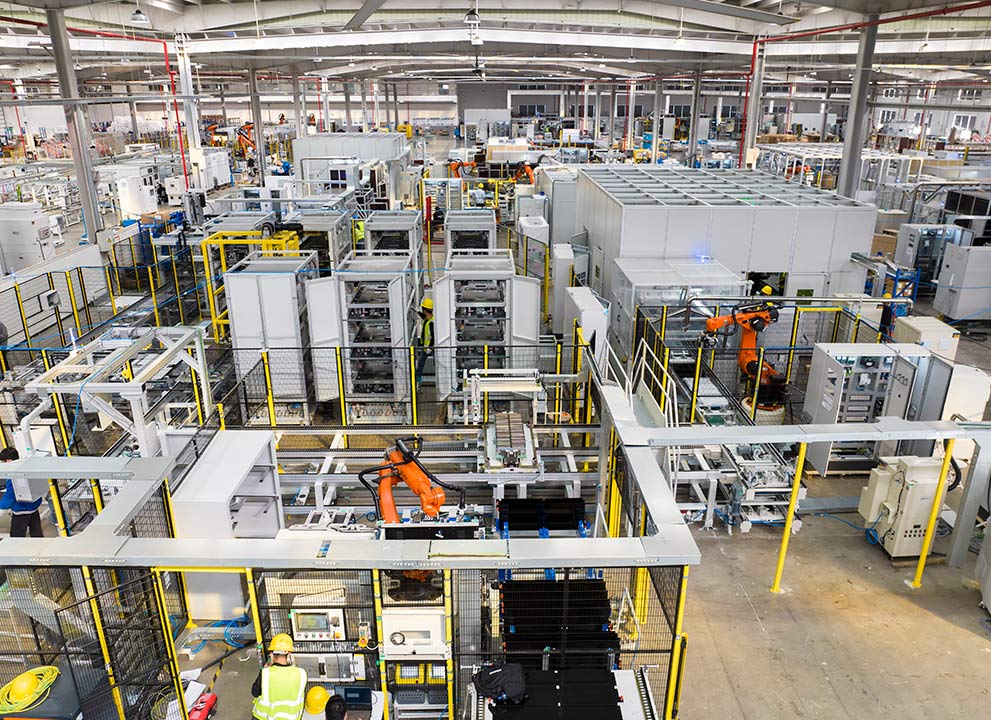
The problem that doesn’t announce itself
When a cell line stops, it rarely gives a friendly warning. Decisions made at procurement echo through months of downtime, safety incidents, and wasted batches. Choose equipment because of a glossy demo and you inherit its blind spots. Choose software because of a single KPI and you inherit its brittleness. The first failure is often selection, not hardware. Watch procurement that treats battery manufacturing automation like a checkbox; that small mistake becomes a blackout.
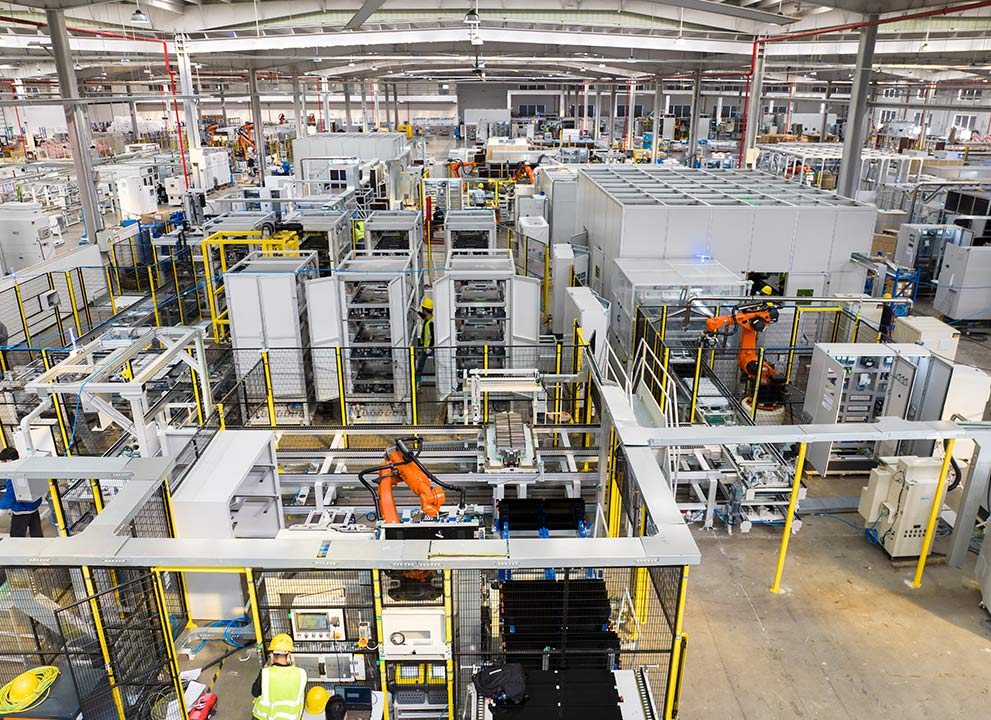
Where selection decisions go wrong — and what to do instead
– Betting on lowest upfront cost: Cheap robots and PLCs look attractive on the quote. They won’t tell you when they fail to handle cell variability or when spare parts vanish. Buy for total operating life. Require an availability metric, spare-parts roadmap, and clear mean-time-to-repair (MTTR) targets.
– Confusing customization with future-proofing: Highly bespoke fixtures can optimize one model but break the line when designs shift. Specify modular tooling and standard interfaces. Demand quick-change modules and clear mechanical/electrical interchange specs.
– Treating software as a thin wrapper: Locking to proprietary data models kills visibility. Insist on open protocols (OPC UA), historical traceability, and an MES handoff plan. Validate data flows before signing contracts.
– Skipping pilot runs: A dry factory acceptance test won’t catch battery-specific defects like electrode misalignment or coating variance. Run a sub-line pilot with real material and scale the test to expected takt times.
– Overlooking sensors and inspection strategy: Vision alone misses subsurface defects; thermal and impedance checks catch what the eye cannot. Map inspection points to failure modes and require redundant sensing where risk is high.
– Undervaluing human factors: Operators who can’t override safely will bypass systems. Design HMI for immediate clarity, not engineering elegance. Train, test, and time operator interventions during acceptance.

Hidden technical traps that sabotage throughput
Lines fail in subtle ways. Communication lag between PLC and MES creates micro-stalls that look like statistical noise until they cascade. Poorly partitioned control logic creates race conditions under peak load. Data models that duplicate state invite reconciliation errors. How to stop it: demand control logic review, require end-to-end latency targets, and insist on data ownership rules. Test these under load. Repeat the tests with actual cycle profiles.
Safety and thermal realities no vendor demo will dramatize
Thermal runaway is not a theoretical risk. Cells behave unpredictably when equipment misfeeds, overcompresses, or when solvents linger. Selection that ignores cell chemistry and thermal management invites catastrophic failure. Require thermal monitoring at cell-level, explicit procedures for solvent handling, and a certified safety plan tied to realistic failure modes. Expect a vendor to produce a failure response plan you can run in a drill.
Integration failures: how good islands become bad archipelagos
One excellent machine sitting alone is useless. Machines must talk, not just operate. Integration failures are often political: teams appoint different vendors without enforced interface standards. Specify message contracts, heartbeat checks, and alarm routing. Make the contract include recovery behaviors — how does the line resume after a module reboot? Add an integration acceptance test that simulates partial outages.
Checklist for selection and acceptance — immediate actions
– Define worst-case takt and force vendors to demonstrate at that rhythm.
– Require spare parts availability and a committed MTTR.
– Insist on modular mechanical interfaces and documented electrical pinouts.
– Demand open-data export (OPC UA or equivalent) and a sample dataset before purchase.
– Run a cell-type pilot on live material for at least one production shift.
– Include thermal and impedance checks in inspection design.
– Build operator override tests into factory acceptance; time and document recoveries.
Lessons seen on the floor
I’ve watched teams learn this the hard way. At a major plant, like the Tesla Gigafactory in Nevada, hurried rollouts without robust pilots led to weeks of rework and redesign. The lesson was clear: real-world cycles reveal assumptions. Treat factory time as the true validator, not the sales demo.
When choices align: what reliable selection looks like
Good selection centers on repeatability and recoverability. Specify measurable targets: uptime, MTTR, and defect-per-million cells. Require vendors to produce test evidence and run joint acceptance drills. Demand clear data ownership and graceful degradation modes. These are not aspirations; they are conditions for survival.
Why the quiet of a well-chosen line matters
Silence on the shop floor is not absence of problems. It’s the presence of systems that handle errors without drama. When machines fail, they fail into defined states. When software loses a packet, the line pauses, reconciles, and resumes. That discipline comes from upfront selection and brutal validation. It saves months of grief.
Closing, without promises—only hard direction
Decisions made now echo through every shift and every shipment. Demand evidence. Insist on pilots and clear recovery rules. Expect vendors to prove performance with your materials. The right selection keeps the lights on; the wrong one lets the line die quietly. For teams seeking an integrative, tested approach to Battery smart manufacturing, look for partners who document failure modes, prove MTTR, and build modular recoverability into every cell-process—qualities embodied by experienced operators and integrators such as FHS.