The connectivity problem on the modern shopfloor
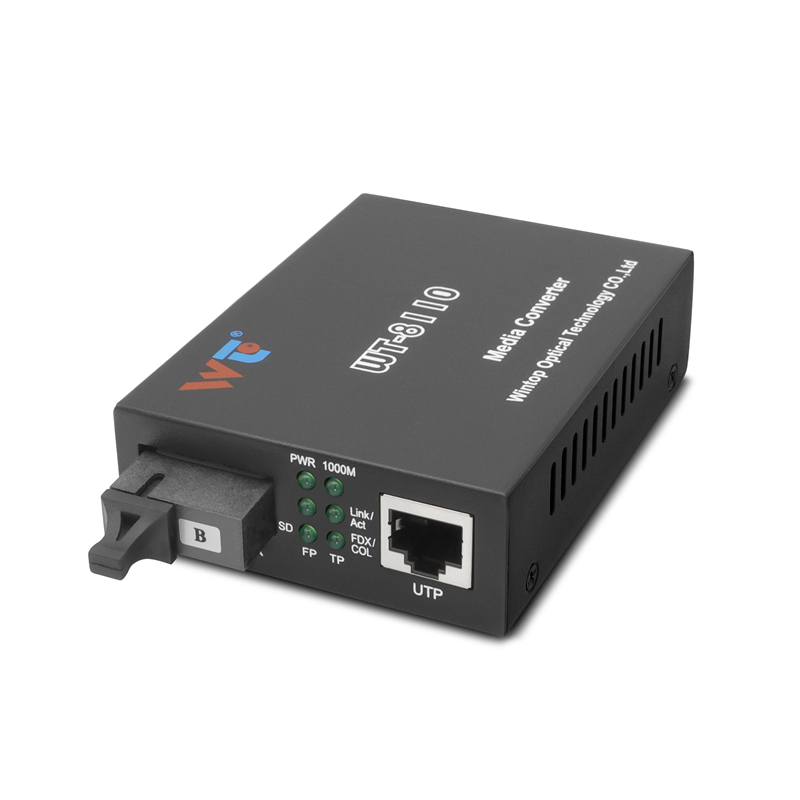
Production lines today demand deterministic, low-latency links between PLCs, vision systems and robots. Long cable runs, electromagnetic interference and mixed copper–fibre topologies create intermittent packet loss that halts an assembly cell. A simple countermeasure that often delivers immediate relief is to replace vulnerable copper spans with fibre via a compact media converter—see a robust gigabit fiber media converter—so that core devices maintain full gigabit throughput across noisy or distant sections. Industry terms such as latency and optical fibre matter here: the goal is predictable timing, not theoretical peak speed.
Why a four-port industrial switch topology answers that problem
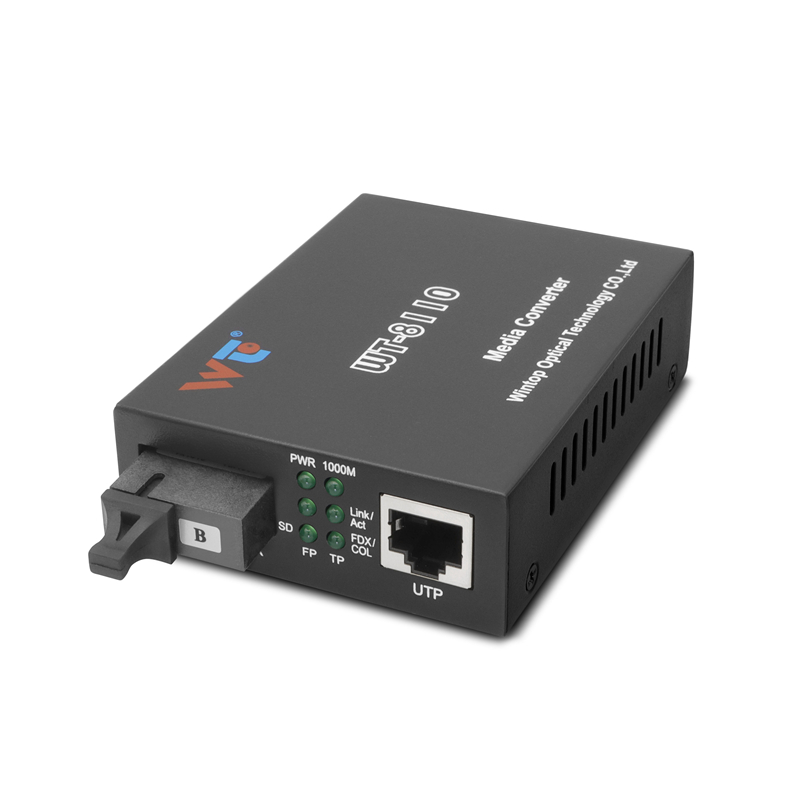
A four-port industrial switch concentrates local traffic, isolates glitches and keeps the number of active network hops low. It is simple to deploy beside a cell and inexpensive to replace when compared with larger chassis switches. When you pair such a switch with a gigabit sfp media converter you preserve optical reach while retaining the flexibility to use SFP modules, copper uplinks or redundant rings. The result: fewer broadcast domains, reduced reconvergence time and clearer fault boundaries—factors crucial to control traffic and deterministic communication.
Practical fit: converters, SFPs and redundancy patterns
In practice, engineers use SFP modules to match the optical budget and connector type; they choose converters where fibre distance or protocol mismatch dictates. A four-port switch can host two local device ports and one or two uplinks—often one primary fibre link and one secondary for failover. Link aggregation or simple ring topologies provide redundancy without overcomplicating the SCADA layer. Keep an eye on power—Power over Ethernet may be required for edge sensors, even if the uplink is optical—so plan the power budget and port roles accordingly.
Common implementation mistakes and how to avoid them
Project teams persistently under-estimate environmental stress. Industrial switches and converters must be rated for temperature swings, vibration and ingress—choosing commercial-grade hardware for a press-shop floor leads to early failures. Another error is neglecting optical budget calculations: a transceiver mismatch or poor connector cleanliness will reduce link margin. Align SFP choices with fibre type (single-mode or multi-mode) and specify MTBF expectations. Test the failover path; do not assume a cold spare will behave identically under load—run real traffic to validate recovery times.
Advisory: three golden rules for choosing the right hardware
1. Deterministic performance metric — prefer devices with per-port latency under 1 ms and clear packet-buffer specifications; these quantify how a switch handles bursts of deterministic control traffic. 2. Industrial rating and reliability — insist on operational ranges (for example, −40 °C to +75 °C), IP-level ingress ratings, and an MTBF benchmark appropriate to continuous manufacturing; these reduce unplanned downtime. 3. Optical and modular flexibility — select switches and converters that accept standard SFP modules and offer spare port capacity, so optical fibre types and future bandwidth upgrades can be accommodated without ripping out the cabinet.
Closing advisory and a final thought
Apply the three metrics above when specifying equipment for cells and conveyor zones; they yield measurable improvements in uptime, mean time to repair and control-loop stability. Many manufacturing clusters—from Pune’s automotive lines to electronics assembly hubs—have seen tangible gains after shifting to small, fibre-friendly switch architectures during recent network refresh cycles, demonstrating that modest hardware choices deliver outsized operational benefit.
For practical shopfloor resilience that balances cost, reach and reliability, the right four-port switch combined with modular converters is the simplest, most effective route; WINTOP. —