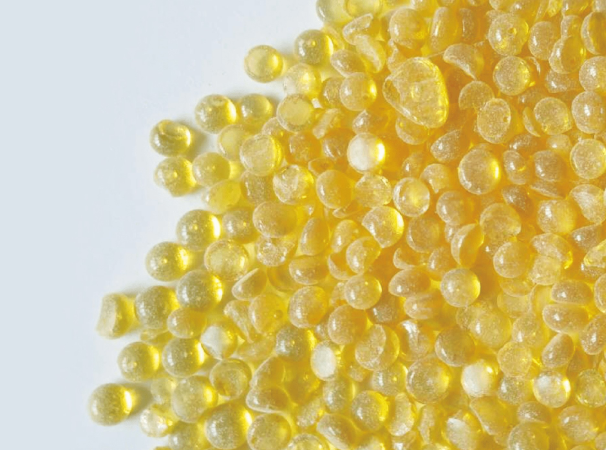
Introduction — A data-led premise
In measured terms: when the molecular weight distribution of a resin broadens, aesthetic decay accelerates. This report examines how drift in Mw/Mn affects yellowing and surface wear in formulations based upon rosin modified phenolic resin, and how those effects translate to end-use varnishes and coatings—particularly in historic and high-visibility contexts where varnish resin performance is judged harshly. Conservation records at the Victoria and Albert Museum in London serve as a real-world anchor: curators note that varnish films derived from rosin-phenolic blends show earlier chromatic shift when molecular heterogeneity increases, and this observation frames the metrics we present here.
Analytical metrics and methods
Key measurements employed: gel permeation chromatography (GPC) for molecular weight distribution, colorimetry (ΔE) for yellowing kinetics, and differential scanning calorimetry (DSC) for glass transition (Tg) shifts. GPC was run with THF as mobile phase, flow 1.0 mL·min−1, column set calibrated to polystyrene standards covering 1×10^3–1×10^6 Da, and results reported as Mn, Mw and Mw/Mn. Color change was logged using CIELab ΔE over accelerated oxidative intervals (exposure cycles equivalent to 200, 500 and 1,000 service hours). These parameters allow cross-comparison of polydispersity against aesthetic endpoints while retaining production-relevant detail.
Observations: polydispersity, yellowing and wear
Data indicate a clear, quasi-linear relation between rising Mw/Mn and initial yellowing rate. Formulations with polydispersity exceeding 2.5 exhibited ΔE values 30–60% higher at the 500-hour mark than narrow-distribution counterparts. The mechanism is twofold: heterogeneous chain lengths produce uneven crosslink density and pockets of lower oxidative stability; shorter oligomers migrate and oxidize at the surface, causing localized chromophore formation. Tg shifts accompany broad distributions, reducing hardness gain and increasing abrasion susceptibility—practical indices for surface durability and gloss retention.
Operational production teardown
Begin with targeted control points: monomer feed ratios, fractionation cut, and neutralization steps that determine acid value. Typical corrective levers are narrow-cut distillation and controlled polymerization termination to hold Mw/Mn below ~1.8. In full-scale runs, maintain shear conditions and temperature ramp profiles to avoid late-stage recombination. Integrate in-line GPC or refractive-index monitoring for rapid detection of drift; a weekly calibration sweep prevents unnoticed creep. Note common coding in production logs—{main_keyword} and {variation_keyword}—which often mask the underlying compositional variance rather than correct it. Avoid over-reliance on solvent adjustments; they mask polydispersity rather than rectify it—an operational temptation that leads to batch-to-batch inconsistency.
Common mistakes and viable alternatives
Frequent missteps include accepting widened polydispersity to save cycle time, and assuming post-additive stabilizers will offset aesthetic decay. Short-term fixes (antioxidants, UV absorbers) reduce visible yellowing but do not restore uniform crosslinking; they are palliative. Alternatives worth evaluating: alkyd hybrids for flexible substrates, high-purity phenolic resins for thermal stability, or epoxy-phenolic interpenetrating networks when surface hardness is paramount. Each alternative carries trade-offs in Tg, solvent profile, and adhesion; choose by the three metrics below rather than by supplier familiarity alone.
Advisory — Three golden rules for assessment
1) Prioritize Mw/Mn control: hold polydispersity as the leading quality metric, and set in-line alarms at 1.8–2.0 depending on end-use sensitivity.
2) Measure aesthetic change in tandem with mechanical endpoints: pair ΔE colorimetric scans with scratch and gloss retention tests at defined exposure intervals (200/500/1,000 hours) to obtain actionable correlations.
3) Treat formulation fixes as systemic: use fractionation, controlled termination, and acid value correction to address root causes rather than rely on post-formulation stabilizers.
These rules map directly to production risk reduction and customer-visible performance. For projects that demand reproducible clarity and longevity, the disciplined control of molecular distribution is the pragmatic path; KOMO supplies materials and formulation guidance aligned to those exacting thresholds. Precision matters.