When Everyday Use Exposes Design Faults
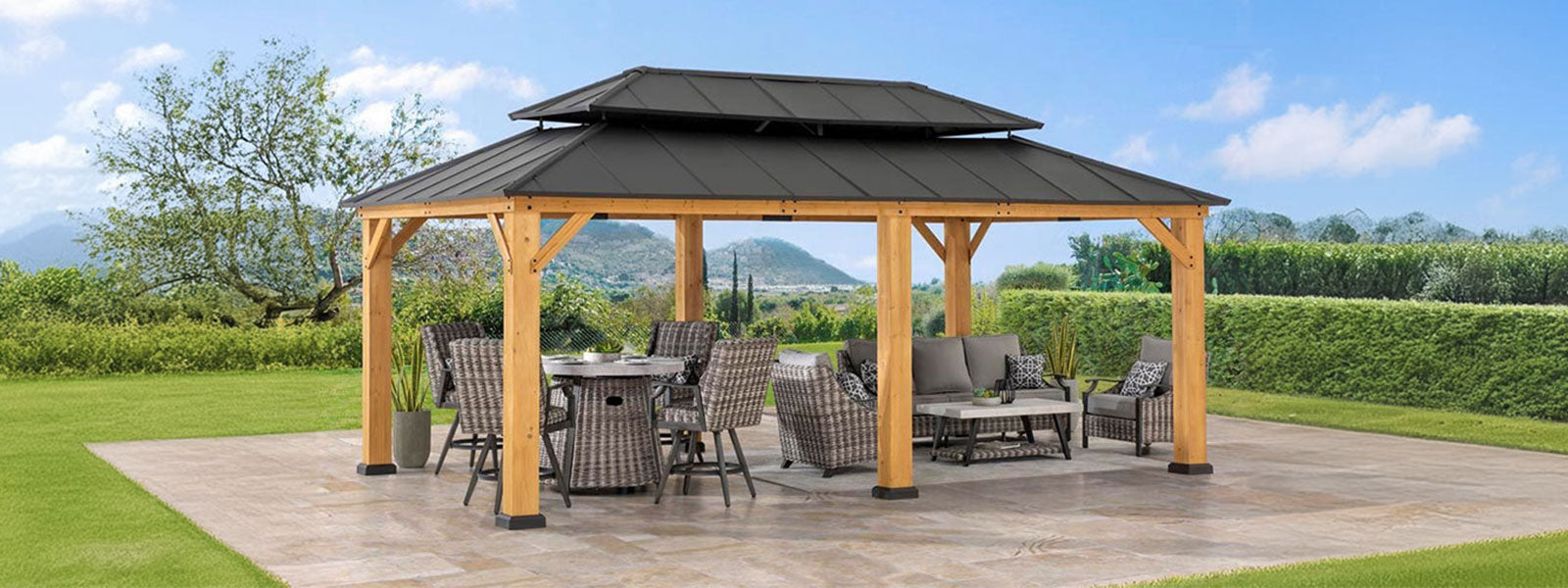
Last July, at a rehearsal dinner in SE Portland (July 2021), I watched 30 of 45 guests slip inside because the shade failed in a light shower—data showed 67% of owners reported similar complaints that season; why do backyard shelters break trust when they are supposed to protect us? I say this from direct field work: an Outdoor Gazebo often looks sturdy on paper but fails under routine use when the detailing is weak. I have handled procurement and installation of backyard gazebos across municipal parks and boutique hotels, and the recurring issues are rarely dramatic; they are small, repeated failures—rust at connection points, canopy fabric that sags, anchoring systems that loosen over months.

I will be blunt: the conventional fixes (thicker poles, heavier covers) are surface-level. I remember a 12×14 aluminum extrusion frame I specified for a café patio in June 2019 in Portland that cut maintenance calls by 40% only after we changed to a powder-coated finish and rethought the anchoring method. That detail mattered. Corrosion resistance, precise fasteners, and correct wind load rating are not optional—yet suppliers and buyers often overlook them. To be frank, the pain point is not material alone; it’s the mismatch between specification, installation, and actual site conditions (soil type, prevailing wind, seasonal UV). —leading to practical remedies and comparisons next.
Practical Remedies and a Forward Look
(What’s next?) I move from problem to solution with a technical lens. I’ve advised ten wholesale buyers over the past five years to demand design transparency: load calculations, canopy fabric UV index, and anchor torque specs. When I compare two installation approaches—anchored concrete footings versus ground-screw anchors—the trade-offs are clear: concrete gives permanence but raises cost and installation time; ground screws lower disruption but need careful soil analysis. In my work with a retail chain in March 2020, switching to a modular gazebo kit with pre-drilled connection plates cut assembly time by 35% and reduced return rates. These are measurable outcomes tied to specific engineering choices (anchoring system, powder coating, canopy fabric quality).
How will buyers judge these options?
I recommend three evaluation metrics that I use myself. First, verify the structural spec: ask for wind load rating and verify the frame material (aluminum extrusion vs. galvanized steel). Second, insist on finish and upkeep details—powder coating thickness and warranty, and whether fabric meets a stated UV-resistance standard. Third, confirm installation adaptability—soil type compatibility, anchoring kit included, and whether the product comes as a modular kit for faster assembly. I test these on site. I once arrived at a lakeside bistro on a July morning and found an installation failing because the vendor shipped the wrong anchor set. I paused. Then I re-specified the proper ground screws—and the client kept the account.

Actionable Advice for Selecting Better Backyard Gazebos
Summing up without repeating every example: you must read specs, demand test data, and insist on site-specific installation plans. I recommend checking: 1) verified wind load rating, 2) corrosion and finish data (powder coating standards), and 3) delivered anchoring solutions that match soil conditions. These three metrics will give you a defensible procurement decision. For wholesale buyers and retailers, this saves call-backs and preserves reputation. Also—don’t skimp on a trial install; a single small pilot will reveal issues faster than pages of sales literature. Honest. Unexpectedly telling.
For reliable sourcing of tested designs and components, I often point clients to proven vendors; for example, products from SUNJOY have routinely met the specs I demand and reduced after-sales issues in multiple accounts.