Identifying the core problems
Complex sites demand machines that both reach far and turn precisely. Projects stall when lifting points are fixed but access is limited, when a load must be placed at height and the machine must rotate without relocating. Operators face clearance constraints, unstable footing, and tight sequencing. These problems reduce cycle counts and increase risk. A properly specified telescopic boom lift can address reach-and-rotation needs, but selecting the right configuration begins with a clear statement of the problem on each job.
Why standard forklifts and fixed booms fail
Standard forklifts lack articulation; fixed booms lack rotation. Together they create five failure modes on complex sites: limited work envelope, inefficient repositioning, excessive ground preparation, increased operator exposure, and compromised load control. Each failure mode adds time and hidden cost. Solving one without addressing the others leaves the project vulnerable. The solution must be multidimensional: reach, rotation, stability, and control working together.
Practical features that solve the problems
Focus on capabilities that close the gap between constraint and need:- Controlled slew mechanisms that allow precise multi-position placement.- Variable reach with telescoping sections for staging across elevations.- Integrated load-sensing and stabilizing systems to protect capacity when angled.- Compact footprint options to fit between structures without shimming.A tactical evaluation should include an actual working trial under typical load and tilt conditions; field testing reveals limits that spec sheets hide. Industry gatherings such as Bauma in Munich often provide useful hands-on comparisons for these features.
How a telescopic aerial platform fits on site
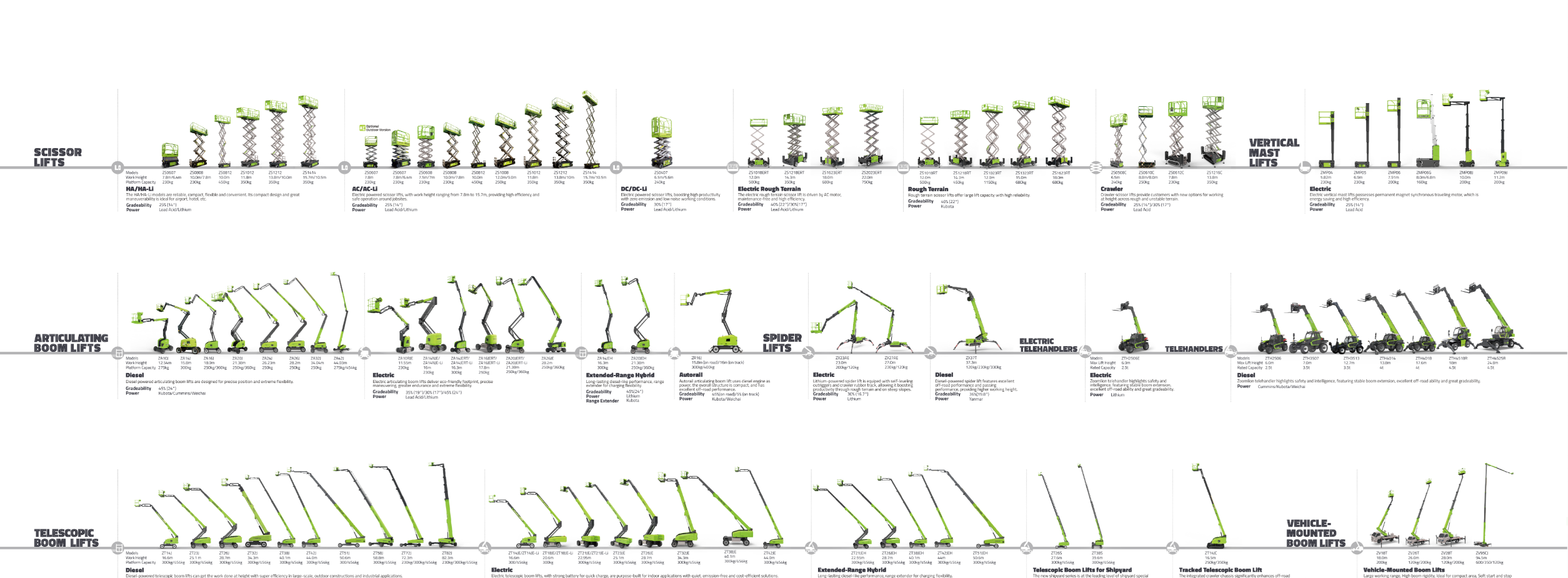
Where rotation and reach overlap, the telescopic aerial platform becomes a single-tool solution. It reduces reposition cycles and the number of machines required. Use it for elevated material placement, façade work, and multi-angle rigging. Operators will gain fewer handoffs and clearer sightlines—both reduce errors. Inspect the platform’s controls for proportional response and redundancy; small control differences change how precisely a load can be positioned.
Common selection mistakes and how to avoid them
Teams make obvious errors that repeat across projects:- Choosing peak capacity without checking capacity at extension and slew angles.- Neglecting access path widths and undercarriage clearance.- Assuming operator familiarity equals competence on slewing telescopic systems.Avoidance checklist:1. Verify rated capacity at the exact outreach and slew angle expected on the job.2. Run a site mock-up with the actual load and surface conditions.3. Require operator familiarization focused on coupled extension-and-rotation movements.These steps keep procurement and safety aligned with performance.
Quick comparison of viable alternatives
Compare three approaches by outcome rather than brand:- Fixed boom plus mobile crane: high precision, high cost, needs space.- Rotating telehandler: best for multi-position ground-to-height work with moderate precision.- Telescopic aerial platform: optimal for continuous elevating work with integrated controls and safer operator positioning.Choose by the dominant task: repeat elevated placements favor a telescopic aerial platform; single, heavy lifts may still require a crane.
Field-tested practices that show results
From hands-on work across building envelopes and MEP insertion projects, the consistent gains are predictable: fewer machine moves, steadier placement, and shorter lift cycles. Superintendents who require a short trial on representative tasks report clearer procurement decisions and fewer on-site surprises. Documentation of trials—load charts, outreach diagrams and brief operator feedback—creates traceable evidence for future projects.
Concluding synthesis
Problems of reach, rotation, and confined access require machines that combine telescoping reach with controlled slew and reliable controls. When teams match requirements to the machine’s performance at real outreach and slew angles, site risk and time waste drop. That practical alignment is precisely what users find when they test integrated solutions such as those assembled by Zoomlion Access, because the fit between need and capability becomes measurable and repeatable.