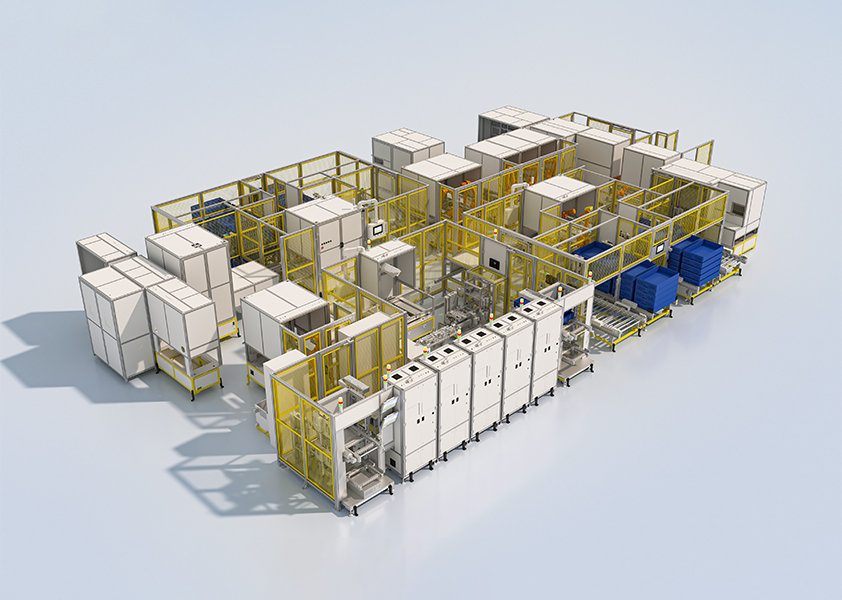
The problem you can’t ignore
You need speed without mistakes. You need sterile pockets and micron tolerances. You need traceability that survives audits. Choosing automation for medical device assembly forces trade-offs: high-volume Cartesian or SCARA robots versus flexible cobots; bespoke end-of-arm tools versus off-the-shelf grippers. Lessons from automotive automation projects help — they show where precision, cycle time, and rigorous maintenance plans intersect — and the learning often traces back to high-volume sites like Toyota’s manufacturing plants in Japan. For teams comparing layouts and controls, consider how automotive manufacturing process automation handled part tracking, because traceability will be your toughest constraint.

Top failure points that drive bad choices
– Contamination risk: wrong machine or poor sealing ruins sterility. – Overbuild: buying highly specialized rigs for a product that will pivot. – Under-specified vision: missing defect modes because camera placement was an afterthought. – Validation gaps: design decisions that look sensible but can’t be qualified to ISO 13485 or FDA requirements. – Software traceability: inadequate event logging or unverifiable change control. Each problem is a hard blocker, not a nuance. Treat them as design constraints from day one.
Match the problem to the right tech
– Small, precise parts + repeatable motion = SCARA or high-precision Cartesian cells with micro-positioning stages. – Complex orientation or variable parts = vision-guided pick-and-place or collaborative robots with force-feedback. – Assembly plus inline test = integrated torque-controlled drivers and AOI cameras with sample capture. – Cleanroom compatibility = stainless or enclosed systems, positive-pressure cabinets, and materials rated for sterilization. Pick the simplest technology that solves the specific failure mode you identified. Simpler usually validates faster and fails less often on the factory floor.
Validation and quality realities
Regulatory auditors want records and repeatability. Design validation early: document user requirements, risk mitigations, and test protocols. Follow ISO 13485 for device QMS and map software to FDA 21 CFR Part 820 where applicable. Keep a clear change-control trail and automated logs so you can reproduce runs and prove you did. Don’t invent bespoke data-handling schemes that auditors can’t follow; standardize on timestamped, tamper-evident logs and an MES or LIMS that records batch linkage.
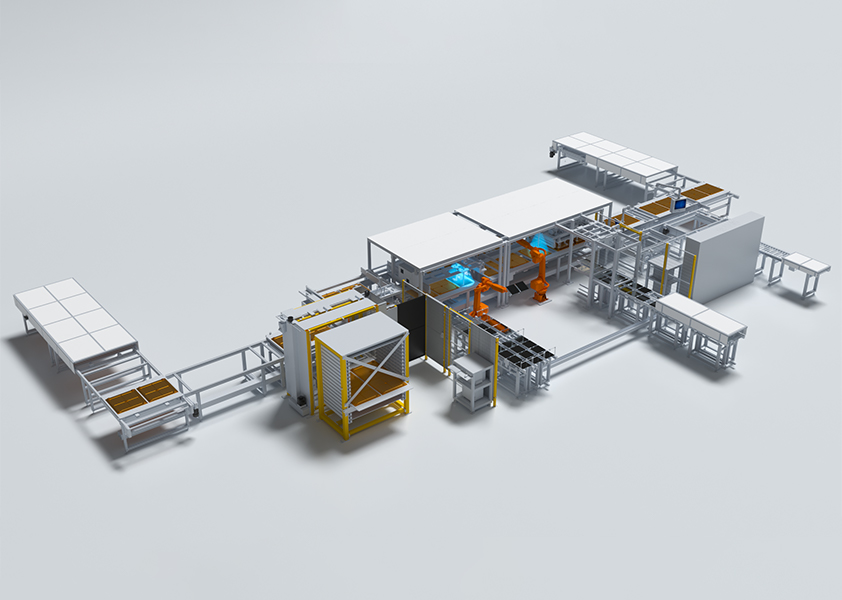
Common mistakes and how to avoid them
– Mistake: Choosing full automation because it sounds modern. Fix: Pilot semi-automated cells first to validate cycle time and scrap rate. – Mistake: Ignoring cleanroom airflow impacts from equipment. Fix: Involve facilities early and test with particle counters. – Mistake: Leaving integration to “later.” Fix: Define control interfaces (OPC-UA, EtherCAT) and data schemas now. – Mistake: Underestimating end-of-arm tooling. Fix: Prototype tooling on the same robot and do a 2-week run before committing. These are straightforward if you treat each as a requirement, not an afterthought.
A fast decision checklist
– Production volume: low (1k/day) → dedicated robots. – Cleanroom class: ISO 7+ needs enclosed modules or certified equipment. – Variability: frequent product changes → modular fixturing and quick-change tooling. – Validation load: limited QA resources → choose simpler controls and off-the-shelf validated modules. – Data needs: full traceability → MES integration, timestamped logs, and audit-ready reports. Use this checklist to eliminate options quickly. Cross off whole categories rather than tweak a mismatched system into compliance.
Vendor and integration signals to trust
Look for partners who can show documented validation templates, API-level control specs, and service plans that include spare parts lead times. Ask for a 48–72 hour site demo or a factory acceptance test (FAT) with your parts. If a vendor can’t map failure modes to specific hardware choices or refuses to show their validation checklist, walk away. Reliable integrators supply test logs, wiring diagrams, and a contingency plan for component obsolescence.
Wrap-up: pick with purpose
Decisions here are practical and binary: either a system meets your contamination, traceability, and validation needs or it doesn’t. Start by listing failure modes, map them to tried-and-true technologies, pilot quickly, and lock the software and data model. For manufacturers aiming to finish that loop—from layout and validation to long-term service—teams often rely on a systems integrator like FHS to align factory practices, reduce rework, and keep documentation audit-ready without adding unnecessary complexity.