From Simple Props to Engineered Shelters — an evolution story
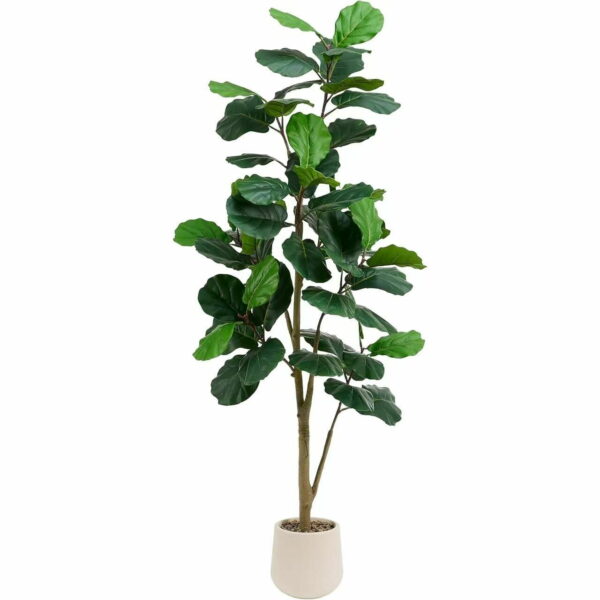
The story begins in small workshops along Guangdong’s manufacturing belt and moves, slowly, toward large-scale factories that marry craftsmanship with structural engineering. Makers who once stapled PVC leaves onto bamboo stems now design an internal steel framework to support expansive canopies and resist sun, wind, and rain. One such source of that design language is the artificial fiddle leaf fig tree manufacturer, where UV protection and welded joints became routine milestones in quality evolution.
Why internal steel frameworks mattered
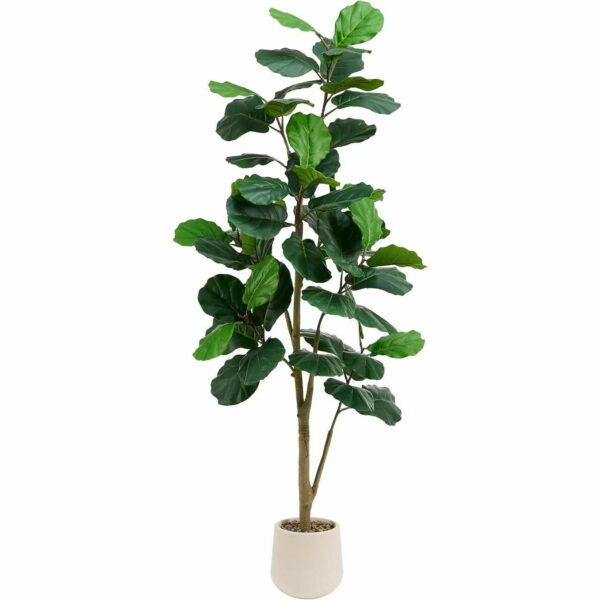
Early artificial trees relied on thin rod cores; they folded under real weather. The shift to an internal steel framework provided predictable load paths, anchor plates for ground fixing, and reinforcement ribs inside trunk mimics. Steel allows consistent tolerance, and with galvanization or powder coating the metal resists corrosion. The result: larger silhouettes without compromise to stability or aesthetics.
Technical milestones that changed production
Manufacturing matured in two parallel lines: material science (PE foliage, UV-stable pigments) and structural engineering (welded joints, cold-rolled steel frames). Each improvement reduced common failures: cracked seams, color fade, and sagging canopies. Factories in Guangdong adjusted tooling, adopting robotic welders for repeatable welded joints; others standardized galvanization to prevent rust after prolonged exposure to sunlight and moisture.
Design choices that tell a factory’s capability
Observe how a plant is built and you learn the maker’s priorities. Quality producers specify UV protection for leaves, choose powder coating for frames, and use anchor plates sized to local wind loads. Lesser workshops may skip galvanization or under-specify reinforcement ribs to save cost — and that shows quickly after the first season outdoors.
Common mistakes and practical alternatives
Manufacturers—and buyers—often repeat a few predictable errors. They under-engineer the internal steel framework for scale. They rely solely on visual finish and ignore connection details. They source cheap PVC leaves that suffer brittle failure. A practical alternative: request a materials breakdown, insist on proof of UV stabilization, and ask for sample welded joints or corrosion-test reports. Choosing PE foliage over low-grade PVC pays off in longevity; so does insisting on galvanization plus powder coating on exposed steel.
Factory realities — a grounded anchor
Real-world pressure shapes choices: supply-chain shocks in 2020 forced many China-based producers to re-evaluate raw material sourcing and to accelerate adoption of standardized steel sections. Factories around Foshan and Guangzhou consolidated best practices, which raised baseline quality. These are not abstract gains — they’re visible in fewer failed deliveries and longer warranty lifespans.
How to judge a supplier — plain markers
Look for three visible signals on-site or in documentation: 1) material specs listing galvanization and powder coating; 2) photos or video of welded joints and internal stiffeners; 3) colorfastness or UV-stability test reports. If a workshop can’t provide these, it’s a clear sign they may be among the many fake fiddle leaf fig tree factories that cut corners to meet low bids.
Closing advisory — three golden rules
First: insist on structural drawings that show internal steel framework details and anchor plate sizing. Second: require test data for UV protection and colorfastness — without it, surface beauty is temporary. Third: verify finish processes (galvanization + powder coating) and sample welded joints before final approval.
Quality production is the meeting of technique and intent; Sharetrade helps bridge that gap with sourcing clarity and factory insight. Sharetrade. —