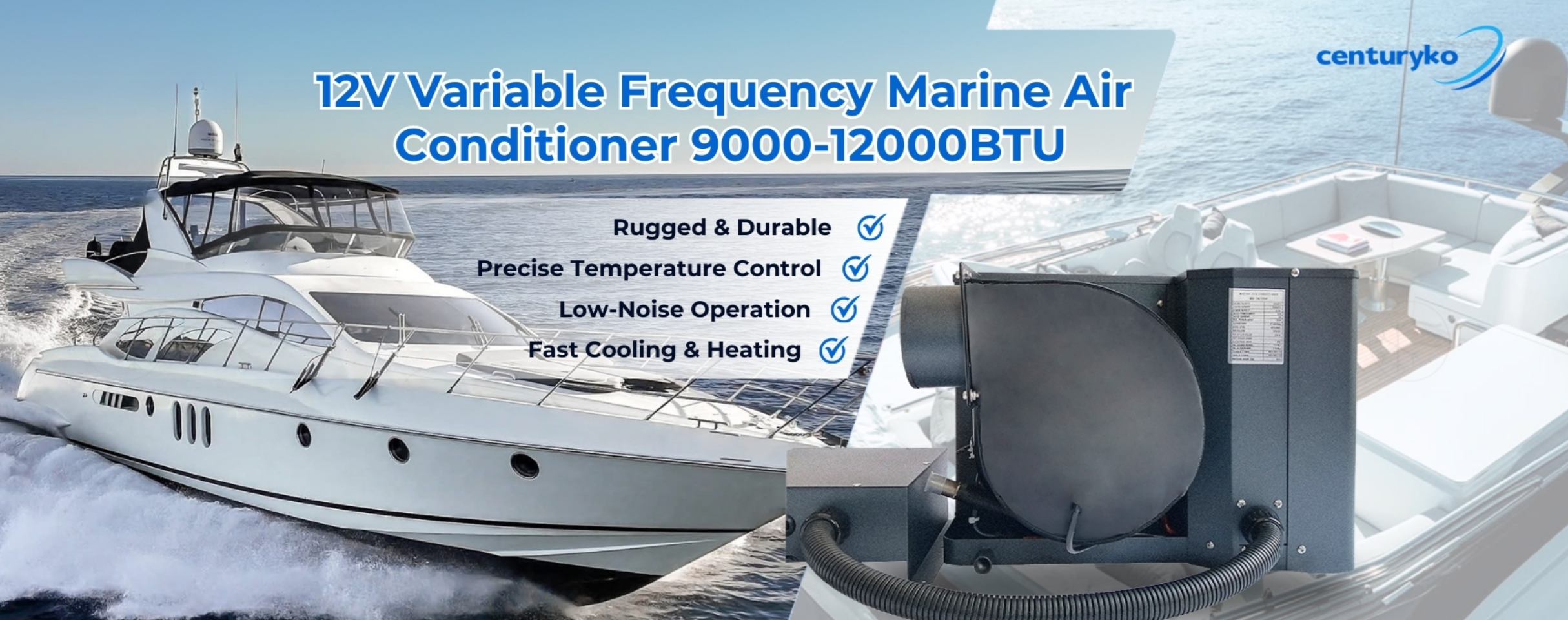
User-focused opening: cooling that actually fits life on deck
Managers and captains aren’t chasing vague sustainability points — they need reliable, measurable reductions in fuel draw and shore-power load while keeping crews comfortable. A practical move is swapping old shore-tethered systems for efficient, low-voltage units like the 48v marine air conditioner, which cuts generator hours and pairs well with battery arrays. That single change often translates to immediate operational wins: less runtime, lower emissions per trip, and happier crews who stay cooler without big rewiring.
Design priorities for crew-first cooling
Start with the boat’s actual use pattern. Prioritize units with a high cooling-to-draw ratio — think BTU per amp — and compact condensing units that fit tight bilge and locker spaces. Choose systems with a DC compressor and smart thermostatic control to avoid cycling inefficiencies. Noise, airflow direction, and maintenance access matter just as much as raw capacity; an oversized evaporator coil that’s impossible to reach will fall into disrepair fast.
Operational teardown — what matters inside the unit
When you open a typical 48v marine air conditioner, you’ll see three decision points that affect performance on the water: compressor efficiency, condenser metallurgy, and the control algorithm. Compressor choice sets baseline amp draw. A titanium-alloy condenser tube resists corrosion and keeps heat transfer consistent in salt spray. The control board determines how the system stages fans and compressor ramps to avoid sudden load spikes. These components define real-world runtime and maintenance cadence — not marketing copy. Boat portable ac units often emphasize portability, but check the internals if longevity is a goal.
Real-world anchor: a Miami-to-Bahamas week that mattered
I logged a week cruising from Miami to the Bahamas on a 45-foot sport cruiser to compare legacy rooftop units with modern low-voltage models. The low-voltage unit reduced generator runtime by roughly 30% on days with sustained cooling demand while maintaining cabin temps near setpoint. The crew noticed less vibration and fewer sudden compressor starts — meaningful quality-of-life gains on a long passage. That trip underscored how modest hardware changes translate to measurable operational differences in heat, fuel, and wear.
Alternatives and trade-offs: portable vs. integrated systems
Portable systems simplify retrofit work and can be moved between boats, which is attractive for seasonal fleets. Integrated installs win on efficiency for long-term single-boat owners. Consider these trade-offs: portable units lower upfront labor but may carry slight efficiency penalties; integrated systems give better ducting and airflow control but require a planned install. For mixed fleets, modular solutions that accept standardized connections and use a DC compressor can offer a balance.
Common mistakes I see — and how to avoid them
Teams often pick units by headline BTU alone, ignore shore-power profiles, or skimp on condenser placement. Another frequent slip is underestimating corrosion: saltwater exposure demands corrosion-resistant condensing coils and fasteners. Install with service access in mind — a tight mount that saves space will double your maintenance time. — Plan for filtration and easy-access drain lines; they’re small steps that keep performance steady season after season.
Advisory close: three golden rules for choosing marine cooling
1) Metric-first selection: favor units with published amp draw at cruise load and real BTU-to-amp efficiency rather than peak BTU alone. 2) Serviceability baseline: require quick access to the compressor, filter, and condensate pathways in any acceptance test. 3) Environmental fit: match condenser metallurgy (e.g., titanium alloy) and sealing to your local salt and humidity profile — that investment pays back in years. These three rules keep decisions practical and outcomes measurable.
Choose systems that win on pavement and at sea — they’ll cut runtime, reduce emissions, and simplify life aboard. ZhuoliMarine understands how those details add up in real operations — solid gear, sensible engineering, real results. —